Prikaz objav z oznako conservational biology. Pokaži vse objave
četrtek, 20. marec 2014
Unhappy tree logs
So, I won't talk about deforestation, much like . I won't really delve into how discoveries like this newfound "gecko-bat" species wouldn't be possible anymore, if forests disappear. Also, I won't say anything more about cultural significance and indigenous people, nor relevance for medicine (Mark Plotkin's (wiki) quote "every time a shaman dies, it is as if a library burned down", see also (2), (3)).
I actually just thought it would be nice to store this photo somewhere.
So here you go.
(1): Source of pic: Got it from Carla, on FB: link here.
(2): Shamanism, By: Mark Andrew Ritchie. I use it as a source of the quote. Found by google.
(3): This book seems interesting: Tales of a Shaman's Apprentice: An Ethnobotanist Searches for New Medicines in the Amazon Rain Forest; Mark Plotkin (Amazon).
(4): This one is also actually pretty scary/cool: face on the side of the tree trunk.
I actually just thought it would be nice to store this photo somewhere.
So here you go.
(1): Source of pic: Got it from Carla, on FB: link here.
(2): Shamanism, By: Mark Andrew Ritchie. I use it as a source of the quote. Found by google.
(3): This book seems interesting: Tales of a Shaman's Apprentice: An Ethnobotanist Searches for New Medicines in the Amazon Rain Forest; Mark Plotkin (Amazon).
(4): This one is also actually pretty scary/cool: face on the side of the tree trunk.
sobota, 26. oktober 2013
Volovja reber - Pokrajina, ki bi lahko postala narodni park
"Elektrarna Senožeška brda, če bo zgrajena, kot je načrtovana, bo v petnajstih letih dobila okoli 150 milijonov evrov subvencij, kar pomeni, da bo morala vsaka družina v Sloveniji prispevati 200 evrov.
Pogovarjamo se o res velikih številkah, nekdo pa bo obogatel, ker so subvencije nerazumno visoke."
In pred tem:
"Velik del tega zneska pa prispevamo davkoplacevalci. Ocenjujemo, da so spodbude previsoke in bi lahko z denarjem, ki gre za subvencioniranje vetrnih elektrarn, naredili v tem trenutku več koristi za zmanjševanje CO2, če bi ga vlagali drugam. Na primer v energetsko sanacijo stavb, izolacije, zamenjavo oken. Ko bo to narejeno, pridejo na vrsto tudi vetrnice. Ta trenutek pa ta denar ni gospodarno porabljen."
Vir: Petrovec (2013). Pokrajina, ki bi lahko postala narodni park. Tomaz Jancar o boju za Volovjo reber in njenih lepotah. Nedeljski Dnevnik, 23. 10. 2013, Str. 10.
'Ne vem, zakaj Hrvatje znajo prodajati nacionalne parke, Slovenci pa ne.'
Kaj vse ponuja Volovja reber
"Ce pridete na Volovjo reber ali Gure, kot se ji reče po domače, vam seže pogled na kvarnerske otoke vse do Paga. Ljubitelji ptic bodo videli tam pestrost živalskih vrst, ki je med največjimi v državi. Na Volovji rebri živijo vse velike zveri, ki jih imamo v Sloveniji, in to najbolj zdrave populacije. Risi volkovi, medvedi. Velika je tudi raznolikost rastlinskih vrst."
sreda, 23. oktober 2013
NEW! Organic and fairtrade Tibetan Salt, straight from the Himalayas!
It was piled and carried by organic life forms, so it's partly organic.
The salt-miners were paid the fair value for the local circumstances, so .50 € per day.
Comes from Tibet. Really. Has a stamp and all. So it must be true.
Did make its way across the globe, to your local store, so It didn't actually come straight from Himalayas, but it was more like a curvy-road.
And to be honest, the environmental impact of the transport far outweighs any fair-, eco- and "organic" components of its production.
May contain actual grains of salt (Sodium Chloride).And traces of other elements and impurities.
Get it at your local organic shop ThrivaViva now and buy some yummy bioekoorganicfairtrade chocolate as well! For only 10 € per 100 g.
We let you pay, because you care.
Just a rant, nothing to worry about. Pointing to sense-less-ness often seen in the shops (yes, even organic ones). And complaining about the costs. Both the costs in the market (too high compared to everything else (which is, in turn actually too low, compared to the environmental impact it has)), as well as the environmental externalities. Oh, and also pointing to silly stuff people - due to past lawsuits - need to put on packaging. You buy a pack of nuts and it may contain nuts, that's nuts.
nedelja, 4. avgust 2013
O laikih, "lifestyle-u" ptic in ekonomskem smislu vetrnih elektrarn
Gasper, tole se strinjam: "da se tovrstne investicije delajo cim bolj javno, da se kar se da najvec vé kdo pije in kdo placa."
Volovja reber: ko pravis 'Do zdaj me se nihce ni preprical, da bo par vetrnic na Volovji Rebri oz. drugje na primorskem blazno vplivalo na naravno okolje. Tisti argumenti o pticih, ki bojo morali zaradi par vetrnic totalno spremenit svoj lifestyle, se mi zdijo bolj buce kot pa kej drugega.'
Ja, sej. Zdijo.
Dve stvari sta pomembni, v mojem pogledu, pri vsej sagi z Volovjo rebrijo:
a) dejanski vpliv na krajino, na lokalno bioto in na poembne in zascitene vrste ptic (ki tam lovijo, letijo in v blizini vzgajajo potomce, beri zgoraj)
b) BOLJ KOT TO, pa je pomembno, da se je s tem primerom zaustavila blaznost postavljanja vsepovprek. Ker se je Elektroprimoska toliko casa dajala s tem primerom, so se morda drugi investitorji (in obcine) ustrasli. Kar je dobro, v smislu, da bi lahko do sedaj imeli precej "degradiranega" okolja iz znj novih vetrnic, ki bi stale naokoli.
Torej, ne da sem proti "napredku", ampak fino je, da se je vgradil pomislek v cel proces.
In vzpostavil legalni oz. sodni precedens, na katerega se lahko sklicujejo bodoci '-varstveniki'.
Kar se tice argumentov: ... vedno je tezko, biologu govorit 'navadnim' ljudem. In to velja verjetno za vsako stroko: pogovori med strokovanjaki in laiki so ... se lahko zakljucijo v floskulah. Ker jaz ti takoj recem, lej, nisem kemik in to je res stvar kemikov. In se bos strinjal, ker npr. ves, da nisem kemik in ker je kemija specificna znanstvena disciplina.
No, z biologijo je, ceprav je prav tako znanstvena disciplina, drugace: vsi smo zivi (ja, ja, tud vsi smo iz "kemije"). Ampak, ker je biologija (in podaljsek oz. sestricna ekologija) veda o zivem in interakcijah z nezivim okoljem, ima vsak neko mnenje. Vsakemu se zdi, da nekaj vé. In je res.
Moj oci vé nekaj o cebelah. Samo ni pa cebelar. Pa tudi ni entomolog, ki bi se specializiral preko let samo na cebelah. Torej, kot jaz vem nekaj o kemiji, ne morem govorit o L-kiralnih aminokislinah na nivoju (in s kompetenco), ki jo ima diplomirani kemik, se vec, kak doktor, ki je na tej temi delal doktorat.
Govorit, da bodo ptice...
... spremenile "lifestyle" in svojo smer leta, v smislu 'kva, sej so se mogle ze prej prilagajat', ... to je laicno posplosevanje.
Recimo en aspekt, o katerem nismo govorili zgoraj (vsi mi), je obodna hitrost elipse (glej spodaj). Ptice roparice, ki so K-strategi (kratek odgovor na Yahoo.Answers ali daljsa razlaga na Wikipediji), in ki imajo torej manjse stevilo potomcev (prim. 6 z nekaj tisoc od rib ali zuzelk) in zavzemajo vecji teritorij, so na vrhu prehranjevalne verige... Njih nihce ne napada. Torej, tudi ne pricakujejo nevarnosti od zgoraj (OK, drzi za najvecje ptice roparice kot so morda orli ali jastrebi, ki so prisotni na Volovji rebri in o katerih je tukaj govora). Njih lazje zadene rotor vetrnice. In tudi v literaturi je moc zaslediti prevladujoce prepricanje, da so kadavri vecjih ptic lazje najdeni s strani raziskovalcev (in traja dlje casa, preden jih kak mrhovinar odvlece ali preprosto, poje).
Pozornost velja nameniti tudi tehnicnim specifikacijah in ucinkovitosti.
Vecina vetrnic ima podane minimalne, optimalne in ne-vec-delujoce vetrne hitrost, ki se gibljejo ponavadi med 3 in 4 m/s (cut-in speed), okoli 13.5 (optimum) in do 20-25 m/s (cut-out speed). To je podatek za 2 MW vetrnico podjetja Vestas za majhne in srednje vertne pogoje (V90-2.0 MW GridStreamer™) (1) s premerom d=90m.
Hecno, vetrni potencijal po Sloveniji ni bas ne vem kaj. Pac nismo Danska, NISMO na obali Severnega morja ali na njegovi sredi in tako pac je. Imamo veter v sunkih, ki je tretji problem.
Ce primerjamo zgornje hitrosti s pregledom potencialno ustreznih območij za izkoriščanje vetrne energije (povezava, 2), pridemo do tega, da se na najboljsih lokacijah veter giblje med minimalno hitrostjo, potrebno za obratovanje vrtnic in med optimumom, torej se gibljemo v sub-optimalnih pogojih delovanja.
To pomeni tudi, da energetski izkoristki na vetrnico (2 MW, 1.8 MW, kolikor koli ze kW) ne bodo taksni, kot jih promovira a) brosura, b) investitor, c) ime vertnice.
Tretji problem je dobava in ne-kostantnost dobave elektricne energije s stalisca distributerjev elektrike in s stalisca drzave oz. obcin. Z to se pojavi problem peak-hours, ur, ko je veliko povprasevanja po elektriki (zjutraj, zgodaj zvecer) in loceno ali povezano s tem (priznam, si se nisem cisto na jasnem, kako to deluje), problem odkupnih cen.
Zaradi perspektivnosti (razvoj tehnologije, izčrpanje fosilnih virov) države, tudi Slovenija, podpirajo izgradnjo VE. Pri nas velja sistem zagotovljenih odkupnih cen. Na strani "Center za podpore Borzen" najdete podatke o sedanjih odkupnih cenah. Za VE je zagotovljena odkupna cena 95 €/MWh, kar je precej več kot trenutna tržna cena, ki je okoli 50 €/MWh. Dejansko je tržna vrednost vetrne energije še nižja, saj navedena cena velja za neprekinjeno dobavo, česar pa VE ne morejo zagotoviti. Vir (2).
(1) http://www.vestas.com/en/wind-power-plants/procurement/turbine-overview/v90-1.8/2.0-mw-gridstreamer™.aspx#/vestas-univers
Za brosure, tukajle: http://www.vestas.com/en/media/brochures.aspx
(2): Gospod M.T. iz IJS-ja mi je predlagal dokument in povezavo na Wikipedijo, tukajle.
Prav tako mi je napisal tele vrstice:
"Na vprašanje VE na Volovji rebri da ali ne je moj odgovor bil tedaj in je sedaj: če pričakujemo okoljsko škodo (minus) in ker VE itak niso gospodarne, potem ni razloga, da bi jih silili "v vsako vas" oz. na vsak hrib.
Je pa smiselno sodelovati pri tem gibanju, za vzorec. To zaradi tega, ker Slovenija ni posebno ugodna s stališča vetrne energije; naj gredo naprej drugi."
Toliko na kratko o argumentih. Kaj vec pa drugic oz. v kaki literaturi.
Volovja reber: ko pravis 'Do zdaj me se nihce ni preprical, da bo par vetrnic na Volovji Rebri oz. drugje na primorskem blazno vplivalo na naravno okolje. Tisti argumenti o pticih, ki bojo morali zaradi par vetrnic totalno spremenit svoj lifestyle, se mi zdijo bolj buce kot pa kej drugega.'
Ja, sej. Zdijo.
Dve stvari sta pomembni, v mojem pogledu, pri vsej sagi z Volovjo rebrijo:
a) dejanski vpliv na krajino, na lokalno bioto in na poembne in zascitene vrste ptic (ki tam lovijo, letijo in v blizini vzgajajo potomce, beri zgoraj)
b) BOLJ KOT TO, pa je pomembno, da se je s tem primerom zaustavila blaznost postavljanja vsepovprek. Ker se je Elektroprimoska toliko casa dajala s tem primerom, so se morda drugi investitorji (in obcine) ustrasli. Kar je dobro, v smislu, da bi lahko do sedaj imeli precej "degradiranega" okolja iz znj novih vetrnic, ki bi stale naokoli.
Torej, ne da sem proti "napredku", ampak fino je, da se je vgradil pomislek v cel proces.
In vzpostavil legalni oz. sodni precedens, na katerega se lahko sklicujejo bodoci '-varstveniki'.
Kar se tice argumentov: ... vedno je tezko, biologu govorit 'navadnim' ljudem. In to velja verjetno za vsako stroko: pogovori med strokovanjaki in laiki so ... se lahko zakljucijo v floskulah. Ker jaz ti takoj recem, lej, nisem kemik in to je res stvar kemikov. In se bos strinjal, ker npr. ves, da nisem kemik in ker je kemija specificna znanstvena disciplina.
No, z biologijo je, ceprav je prav tako znanstvena disciplina, drugace: vsi smo zivi (ja, ja, tud vsi smo iz "kemije"). Ampak, ker je biologija (in podaljsek oz. sestricna ekologija) veda o zivem in interakcijah z nezivim okoljem, ima vsak neko mnenje. Vsakemu se zdi, da nekaj vé. In je res.
Moj oci vé nekaj o cebelah. Samo ni pa cebelar. Pa tudi ni entomolog, ki bi se specializiral preko let samo na cebelah. Torej, kot jaz vem nekaj o kemiji, ne morem govorit o L-kiralnih aminokislinah na nivoju (in s kompetenco), ki jo ima diplomirani kemik, se vec, kak doktor, ki je na tej temi delal doktorat.
Govorit, da bodo ptice...
(kere, tocno? Katere vrste so tam, katere so zascitene oz. katere so bolj naravovarstveno pomembne kot druge, recimo po definicijah evropske unije? So prisotne v razlicnih stevilkah preko let, preko enega leta? Katere ptice prezimujejo, katere so 'stalnice', katere samo preletijo podrocje? Kaj pa druge zivalske (in rastlinske!) vrste?)
... spremenile "lifestyle" in svojo smer leta, v smislu 'kva, sej so se mogle ze prej prilagajat', ... to je laicno posplosevanje.
Recimo en aspekt, o katerem nismo govorili zgoraj (vsi mi), je obodna hitrost elipse (glej spodaj). Ptice roparice, ki so K-strategi (kratek odgovor na Yahoo.Answers ali daljsa razlaga na Wikipediji), in ki imajo torej manjse stevilo potomcev (prim. 6 z nekaj tisoc od rib ali zuzelk) in zavzemajo vecji teritorij, so na vrhu prehranjevalne verige... Njih nihce ne napada. Torej, tudi ne pricakujejo nevarnosti od zgoraj (OK, drzi za najvecje ptice roparice kot so morda orli ali jastrebi, ki so prisotni na Volovji rebri in o katerih je tukaj govora). Njih lazje zadene rotor vetrnice. In tudi v literaturi je moc zaslediti prevladujoce prepricanje, da so kadavri vecjih ptic lazje najdeni s strani raziskovalcev (in traja dlje casa, preden jih kak mrhovinar odvlece ali preprosto, poje).
Pozornost velja nameniti tudi tehnicnim specifikacijah in ucinkovitosti.
Vecina vetrnic ima podane minimalne, optimalne in ne-vec-delujoce vetrne hitrost, ki se gibljejo ponavadi med 3 in 4 m/s (cut-in speed), okoli 13.5 (optimum) in do 20-25 m/s (cut-out speed). To je podatek za 2 MW vetrnico podjetja Vestas za majhne in srednje vertne pogoje (V90-2.0 MW GridStreamer™) (1) s premerom d=90m.
Hecno, vetrni potencijal po Sloveniji ni bas ne vem kaj. Pac nismo Danska, NISMO na obali Severnega morja ali na njegovi sredi in tako pac je. Imamo veter v sunkih, ki je tretji problem.
Ce primerjamo zgornje hitrosti s pregledom potencialno ustreznih območij za izkoriščanje vetrne energije (povezava, 2), pridemo do tega, da se na najboljsih lokacijah veter giblje med minimalno hitrostjo, potrebno za obratovanje vrtnic in med optimumom, torej se gibljemo v sub-optimalnih pogojih delovanja.
To pomeni tudi, da energetski izkoristki na vetrnico (2 MW, 1.8 MW, kolikor koli ze kW) ne bodo taksni, kot jih promovira a) brosura, b) investitor, c) ime vertnice.
Tretji problem je dobava in ne-kostantnost dobave elektricne energije s stalisca distributerjev elektrike in s stalisca drzave oz. obcin. Z to se pojavi problem peak-hours, ur, ko je veliko povprasevanja po elektriki (zjutraj, zgodaj zvecer) in loceno ali povezano s tem (priznam, si se nisem cisto na jasnem, kako to deluje), problem odkupnih cen.
Zaradi perspektivnosti (razvoj tehnologije, izčrpanje fosilnih virov) države, tudi Slovenija, podpirajo izgradnjo VE. Pri nas velja sistem zagotovljenih odkupnih cen. Na strani "Center za podpore Borzen" najdete podatke o sedanjih odkupnih cenah. Za VE je zagotovljena odkupna cena 95 €/MWh, kar je precej več kot trenutna tržna cena, ki je okoli 50 €/MWh. Dejansko je tržna vrednost vetrne energije še nižja, saj navedena cena velja za neprekinjeno dobavo, česar pa VE ne morejo zagotoviti. Vir (2).
(1) http://www.vestas.com/en/wind-power-plants/procurement/turbine-overview/v90-1.8/2.0-mw-gridstreamer™.aspx#/vestas-univers
Za brosure, tukajle: http://www.vestas.com/en/media/brochures.aspx
(2): Gospod M.T. iz IJS-ja mi je predlagal dokument in povezavo na Wikipedijo, tukajle.
Prav tako mi je napisal tele vrstice:
"Na vprašanje VE na Volovji rebri da ali ne je moj odgovor bil tedaj in je sedaj: če pričakujemo okoljsko škodo (minus) in ker VE itak niso gospodarne, potem ni razloga, da bi jih silili "v vsako vas" oz. na vsak hrib.
Je pa smiselno sodelovati pri tem gibanju, za vzorec. To zaradi tega, ker Slovenija ni posebno ugodna s stališča vetrne energije; naj gredo naprej drugi."
Toliko na kratko o argumentih. Kaj vec pa drugic oz. v kaki literaturi.
sreda, 11. maj 2011
Človek in zver - volk
petek, 24. december 2010
DOPPS je včeraj vložil tožbo proti okoljevarstvenem soglasju za VE Volovja reber
Ljubljana, 9. 12. 2010
Včeraj je odvetnik Tomaž Petrovič, ki v prizadevanjih za ohranitev Volovje rebri zastopa DOPPS, na Upravnem sodišču vložil tožbo zoper Agencijo RS za okolje (ARSO), in sicer za razveljavitev Okoljevarstvenega soglasja za Vetrno elektrarno Volovja reber.več (vir: http://www.volovjareber.si/).
V skladu z zakonom o Varstvu okolja ima Upravno sodišče zdaj 3 mesece časa, da o tožbi razsodi. Gre za zadnjo pravno inštanco v Sloveniji.
DOPPS opozarja, da gre v »primeru Volovja reber« za precej več, kot le za ohranitev same Volovje rebri. Gre za precedenčen primer varstva območij Natura 2000, saj je to prvi primer velikega škodljivega posega v Natura območja v Sloveniji. Velik problem je, da sta ARSO in Ministrstvo za okolje v tem primeru uvedla prakso dela, ki močno odstopa od zahtev evropske naravovarstvene zakonodaje in posledično onemogoča varstvo Natura območij v Sloveniji.
torek, 10. avgust 2010
Območje razširjenosti rjavega medveda
Zdravo!
Za vse, ki vas ta tematika zanima oz. vas mora zanimati, pa bi raje, da vas ne (skratka, da živite v območju medveda - torej dobršen del Slovenije;), so na spletni strani Medvedi.si objavili karto razširjenosti rjavega medveda, ki je nastala v sodelovanju Biotehniške fakultete, Lovske zveze Slovenije in Zavoda za Gozdove Slovenije. Karta je dostopna na tejle strani od Medvedi.si, tukaj pa še slika (klik):
sreda, 2. junij 2010
Globalne ... spremembe in Manca Smolej
... ter 200. post! Jeeei.
  Na blogu od Mance Smolej, COSMO maturantke (gee, I hate... no, dislike that word) je zaslediti tudi omembo mojega imena;) Wiii ...
No, nekaj stila pisanja boste verjetno prepoznali, ker so ... "resnična čustva, prelita na papir".
Mesečni izziv
Manca Smolej12. maj 2010
Manca Smolej: Globalne ... spremembe.
  Na blogu od Mance Smolej, COSMO maturantke (gee, I hate... no, dislike that word) je zaslediti tudi omembo mojega imena;) Wiii ...
No, nekaj stila pisanja boste verjetno prepoznali, ker so ... "resnična čustva, prelita na papir".
Mesečni izziv
Manca Smolej12. maj 2010
Manca Smolej: Globalne ... spremembe.
Med taborniki je, kakopak, tudi nekaj biologov oz. študentov biologije. Zadnjič sem ob pogovoru z enim izmed njih (Aljo) pomislila, da je morda nekaj na nas ljudeh, kar nas dela tako vzvišene od drugih organizmov. Aljo mi je namreč ves besen razlagal o spremembah, ki jih ljudje povzročamo na planetu in o tem, kako le-te vplivajo na življenje na njem, na različne živalske in rastlinske vrste. To je naše zaupanje vase, naš egoizem! Kdo pravi, da tigrica ne čuti, če ji zasadijo injekcijo z pomirjevalom pod kožo in ko se zbudi, je nekje daleč stran, za nekimi rešetkami in ločena od svoje ljube savane ali gozda, ostalih tigrov in po možnosti celo mladičev.
četrtek, 19. november 2009
Religions of the World ... unite! (enter 'bananas')
Common beliefs wish list:
1. An unknown higher intelligence created our Universe.
2. We are all connected through the higher intelligence that created us all.
3. We evolve continuously as do our understandings and belief systems.
4. All forms of life need their space to live and evolve unhindered.
5. Our survival is dependent on the sustainable use of shared resources.
6. Our happiness is interdependent therefore equality is paramount.
7. We seek peace and confront problems head on using peaceful means.
8. We celebrate life with every fresh breath of air.
9. We own nothing but the life we are given.
What else, or what different?
1. An unknown higher intelligence created our Universe.
2. We are all connected through the higher intelligence that created us all.
3. We evolve continuously as do our understandings and belief systems.
4. All forms of life need their space to live and evolve unhindered.
5. Our survival is dependent on the sustainable use of shared resources.
6. Our happiness is interdependent therefore equality is paramount.
7. We seek peace and confront problems head on using peaceful means.
8. We celebrate life with every fresh breath of air.
9. We own nothing but the life we are given.
What else, or what different?
četrtek, 9. julij 2009
Degradable plastic bags
They even have concession guys doing it in our little country.
http://www.degradable.net/index.shtml
sreda, 24. december 2008
All the ... small thinigs ...
While going back through some of the drafts for the posts, I stumbled, like a wee drunken dwarf, upon the following lines:
This will be a rather cheesy post. I will talk about love.
Not really, actually. Love needs no taking about. Just as life and moral and ethics and ... money .. need no talking about. Everyone can fall in love. And everyone can loose their beloved. It's called Time, also knowns as: Life.
Read, educate ... think. And you will KNOW.
Know naught and ask, consult the Uncle Google and do many things, apart from deep thought and self-searching, not exercising any empathy on the fellow beings .. (see, it's not just us, humans I'm talking about.)
...
(we go back to the future, ie, to the present (what a lovely word at this time of year;) and continue thus: )
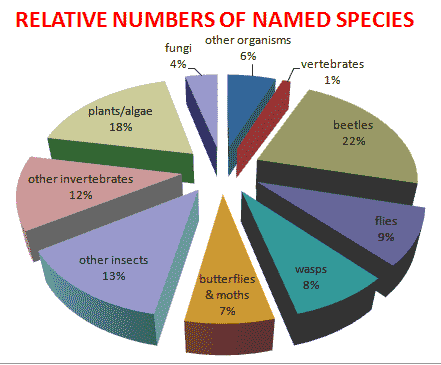
A funny thought just struck me yesterday: just of the Animal kingdom or tszar-dom, or phila or whatever, in the Phillum Crustacea (crabs etc.) there are know approx. 67.000 known species.
NOW. ... For the fungi ... numbers get even better (and wetter?): I think we heard last year they're estimating the numbers to be 4 million (of the wee fungi, yes, Mycotina).
NOW ... of the 250.000 plant species (and more are being discovered, the only setback being the demolition and degradation of the natural world, a small thing, don't you fret a bit) ... of the uknown number of Microbiota, microorganisms (new are being discovered every day, ... and nobody knows, where the number will stop, since we're melting (AAAAA, I'M MEEEELTIIING, MELTING!!!) the unimportant icebergs and the whole continents, apparently (here: for one of the numerous articles on the subject)
new microbes are being cast, demons from the ancient past (when WE were but strains of forming DNA in one of the ancestors, lurking and hiding out in the undergrowth), unto the light of the New Days.
And NOW, consider this:
Homo sapiens is but ONE (1, let me spell it out for us: o n e ) of the species, of the myriads of different life forms, living on this used-to-be-blue-and-green-planet we could once call home.
But ... it's not all so dark, I know, I know.
Thus - love. Another concoction of proteins, enzymes and superfluous fluids, running through our bodies, unknowningly turning us into subjects of our hearts' desires.
Making us addicted to the mere sight of those we cherish and love the most. Making us suffer almost undurable pains, because we are not with whom we'd want to be (if that is the case). Painstakingly tearing away the fibers of our hearts until they are instantly healed back when we are together. But cracks remain .. And through them, the very essence of our beings seeps, the pigments of imagination, writhing on the cold, cold eeyrie air of the reality.
...
For hearts fear the world .. and it's coldness. Not often are they willing to expose themselves to the whims of chance, that brutal Mistress of the Words and Words ...
I'm off with the fairies, I guess, so I'll just stop.
Anyways, folks, wish you the very best of what's left of the 2008
and
"Farewell, wherever you are, till your eyries receive you at the journey's end."
This will be a rather cheesy post. I will talk about love.
Not really, actually. Love needs no taking about. Just as life and moral and ethics and ... money .. need no talking about. Everyone can fall in love. And everyone can loose their beloved. It's called Time, also knowns as: Life.
Read, educate ... think. And you will KNOW.
Know naught and ask, consult the Uncle Google and do many things, apart from deep thought and self-searching, not exercising any empathy on the fellow beings .. (see, it's not just us, humans I'm talking about.)
...
(we go back to the future, ie, to the present (what a lovely word at this time of year;) and continue thus: )
A funny thought just struck me yesterday: just of the Animal kingdom or tszar-dom, or phila or whatever, in the Phillum Crustacea (crabs etc.) there are know approx. 67.000 known species.
NOW. ... For the fungi ... numbers get even better (and wetter?): I think we heard last year they're estimating the numbers to be 4 million (of the wee fungi, yes, Mycotina).
NOW ... of the 250.000 plant species (and more are being discovered, the only setback being the demolition and degradation of the natural world, a small thing, don't you fret a bit) ... of the uknown number of Microbiota, microorganisms (new are being discovered every day, ... and nobody knows, where the number will stop, since we're melting (AAAAA, I'M MEEEELTIIING, MELTING!!!) the unimportant icebergs and the whole continents, apparently (here: for one of the numerous articles on the subject)
new microbes are being cast, demons from the ancient past (when WE were but strains of forming DNA in one of the ancestors, lurking and hiding out in the undergrowth), unto the light of the New Days.
And NOW, consider this:
Homo sapiens is but ONE (1, let me spell it out for us: o n e ) of the species, of the myriads of different life forms, living on this used-to-be-blue-and-green-planet we could once call home.
But ... it's not all so dark, I know, I know.
Thus - love. Another concoction of proteins, enzymes and superfluous fluids, running through our bodies, unknowningly turning us into subjects of our hearts' desires.
Making us addicted to the mere sight of those we cherish and love the most. Making us suffer almost undurable pains, because we are not with whom we'd want to be (if that is the case). Painstakingly tearing away the fibers of our hearts until they are instantly healed back when we are together. But cracks remain .. And through them, the very essence of our beings seeps, the pigments of imagination, writhing on the cold, cold eeyrie air of the reality.
...
For hearts fear the world .. and it's coldness. Not often are they willing to expose themselves to the whims of chance, that brutal Mistress of the Words and Words ...
I'm off with the fairies, I guess, so I'll just stop.
Anyways, folks, wish you the very best of what's left of the 2008
and
"Farewell, wherever you are, till your eyries receive you at the journey's end."
ponedeljek, 22. september 2008
Turles! (Tortoises)
© WWF-EARPO/Kimunya Mugo
Tagging Turtles in Kenya
The Lamu Archipelago is one of the most important marine turtle nesting grounds in Kenya. Five of the seven sea turtle species that range in the Western Indian Ocean are found within the Lamu Seascape.
Three among these species - Green turtle (Chelonia mydas), Hawksbill (Eretmochelys imbricata) and Olive ridley (Lepidochelys olivacea) nest and the other two - Loggerhead (Caretta caretta) and Leatherback (Dermochelys choriacea) have been reported to feed within the Lamu Archipelago.
Over the years, WWF has mobilized the communities to protect the marine turtles both at sea and on the beaches. This August marked the official launch of the sea turtle satellite radio telemetry program in Kiunga Marine National Reserve. Learn more about this turtle tagging program and how the strategic use of scientific monitoring is helping to improve management and conservation of natural resources along the Kenyan Coast.
WWF, in partnership with the Kenya Wildlife Service (KWS) has been running a successful conservation and development project in Kiunga Marine National Reserve (KMNR). Among the key components of the project is species protection, under which the green turtle is a flagship species. The main threats endangering turtles in the Lamu Archipelago are:
1. By-catch by local fishermen as well as semi¬-industrial fisheries
2. Poaching of turtle meat and eggs
3. Marine pollution
4. Disturbance from new tourism developments
5. Targeted catching (turtling culture) by coastal communities
6. International trade in turtle products
7. Alteration and destruction of nesting beaches and habitats
8. Naturally slow rate of recovery of various populations under different levels of exploitation and stress.
Three among these species - Green turtle (Chelonia mydas), Hawksbill (Eretmochelys imbricata) and Olive ridley (Lepidochelys olivacea) nest and the other two - Loggerhead (Caretta caretta) and Leatherback (Dermochelys choriacea) have been reported to feed within the Lamu Archipelago.
Over the years, WWF has mobilized the communities to protect the marine turtles both at sea and on the beaches. This August marked the official launch of the sea turtle satellite radio telemetry program in Kiunga Marine National Reserve. Learn more about this turtle tagging program and how the strategic use of scientific monitoring is helping to improve management and conservation of natural resources along the Kenyan Coast.
1. By-catch by local fishermen as well as semi¬-industrial fisheries
2. Poaching of turtle meat and eggs
3. Marine pollution
4. Disturbance from new tourism developments
5. Targeted catching (turtling culture) by coastal communities
6. International trade in turtle products
7. Alteration and destruction of nesting beaches and habitats
8. Naturally slow rate of recovery of various populations under different levels of exploitation and stress.
ponedeljek, 18. avgust 2008
Summer job on marine biology station Piran
Tukajle ne you-tube-u dostopen link do krajšega prispevka na vest.si (Jonas Ž., Jani Sever et al.)
Posneto pretekli teden, govora je na kratko o terenskem, aplikativnem delu biologov, tehnikov in ostalih na Morski biološki postaji v Piranu Nacionalnega inštituta za biologijo.
P.S.: Naj vas posentki ne zavedejo: šel sem tja seveda samo zaradi možnosti sončenja. 
torek, 12. avgust 2008
Lets eat seasoned fruit!
Gordon Ramsay has reportedly ordered that chefs should be fined if they serve fruit and vegetables which aren't in season at the time.
Ramsay claims he has already spoken with Prime Minister Gordon Brown about the food issue, and believes it would cut carbon emissions because less food would be imported.
source: http://www.media-mentor.co.uk/news/media-training-news/ramsay-dictates-what-we-eat-in-restaurants
ponedeljek, 23. junij 2008
You don't have to be a superhero to save the world
Ne stekam cist, ampak ok;) Je pa definitivno sporočilno. In razloženo tule.
Kind of goes with the song from Eurythmics: I saved the world today, doesn't it?
ponedeljek, 16. junij 2008
Save the RAINFOREST?
SLAP! I love ads like this one on the World Wildlife Fund page. Wicked. Thanks, Lara.
Then again - every decent (morbid/resignated) biologist will tell you that evolution just has its own path and that - THUNK - every minute a couple of species die and every day a couple -THUNK- new are discovered. The problem is - how many incredible and wonderful species have already diminished, without us even knowing?
A question of debate or morale? See, If people want to conserve the species just because of the gain (in medicine, myriads of plant species from the rainforests are used and new drugs obtained, ...), than we are, to say, a sorry lot indeed. THIS IS and should not be the question, but for some it is. But think: WE ARE MAKING STATEMENTS, every day, every minute. By what clothes we wear (who made them, how FAR they were transported, which materials used), what we eat, who we buy electricity from (from more "greener" companies or not?), what we go to work, school, cinema, ..., with.
Here's one unverified source, saying:
Experts estimates that we are losing 137 plant, animal and insect species every single day due to rainforest deforestation. That equates to 50,000 species a year. As the rainforest species disappear, so do many possible cures for life-threatening diseases. Currently, 121 prescription drugs sold worldwide come from plant-derived sources. While 25% of Western pharmaceuticals are derived from rainforest ingredients, less that 1% of these tropical trees and plants have been tested by scientists.
So, biologists and conservational biologists and ecologists (if we deem the term appropriate) have decided: "Huh, right. Save the wales by saying yachts are in danger of being sunk? A bit of a far stretch, but OK, I'll buy it!"
And for the last moral: Most medicine men and shamans remaining in the Rainforests today are 70 years old or more. Each time a rainforest medicine man dies, it is as if a library has burned down.
When a medicine man dies without passing his arts on to the next generation, the tribe and the world loses thousands of years of irreplaceable knowledge about medicinal plants.
torek, 3. junij 2008
Indy!
Oh, well ... v četrto gre rado, pravijo? Ja, če bi šel Rado v četrto ali pa v mestno četrt, bi še šlo, ampak tokrat ga je po mojem mnenju Spielberg malce mimo udaril. Saj film ni slab in dobro nadaljuje tradicijo sage (?) dr. Jonesa, ampak - nekajkrat pa je le pretiraval.
Predvsem so mi kot nekomu, ki mu je malce bližje narava, šle na živce nerealistično prikazane živali - zopet s podcenjevalnim odnosom. (Ok, roko na srce - ostalih kraljestev oz. phyla oz. carstev itak niso upoštevali - ampak zakaj bi jih? Saj so bila prisotna povsod;) V totalni številčni premoči ...
četrtek, 29. maj 2008
The Animal planet (animals save the planet)
One link I gt these days you simply got to see: nice - humorous and witty videos of animals made of play-doh, doing stuff they shouldn't be doing, stuff we're doing ... and should.
So to go to the videos page: click here.
To figure out what you can do, straight away, is what green people and orgs are sounding for years now: reduce electricity and water consumption, drive a bicycle or walk, use renewable resources, recycle, energy-saving light bulbs, new insulation, ya-di-ya-di-ya.
Check out the bear and the penguin and the hippopotamus! The eels are quite wicked as well;)
I'll finish almost like in that song: "Save you, save me, save us together, ... naturally!"
So to go to the videos page: click here.
turn on the speakers!
To figure out what you can do, straight away, is what green people and orgs are sounding for years now: reduce electricity and water consumption, drive a bicycle or walk, use renewable resources, recycle, energy-saving light bulbs, new insulation, ya-di-ya-di-ya.
Check out the bear and the penguin and the hippopotamus! The eels are quite wicked as well;)
I'll finish almost like in that song: "Save you, save me, save us together, ... naturally!"
sobota, 24. maj 2008
Ohranjanje planeta ... in samih sebe
Vsake toliko naletis na netu na kaj res fletnega. No, definicija "vsake toliko" je seveda odvisna od tega, kako pogosto in kako dolgo si na netu. Sploh pa v dobi interneta in kabla je to postal (na žalost?) relativen pojem.
Funny, though: ko smo bili mi otroci (no, niti tako star nisem!) smo dejansko imeli domače številke od nekaterih svojih sošolcev, se kdaj poklicali in kar je še več, šli do njega ali nje domov, fizično pozvonili na zvonec ... in .. ta-daa, počeli nekaj skupaj.
(Ok, saj smo bili tudi mi povsem navdušeni nad računalniki in smo viseli pri sošolcih, ki so jih ravno takrat dobili (486-ke ali celo prve pentiume), a starši so vsaj imeli toliko moči (/nadzora/volje/želje), da so nas po nekem času spodili dol s kompjutra.)
No, pa da ne bom utrujal in moraliziral: spodaj slika in povezava do tega, kar sem dejansko želel objaviti in napisati oz. deliti s svetom.
Funny, though: ko smo bili mi otroci (no, niti tako star nisem!) smo dejansko imeli domače številke od nekaterih svojih sošolcev, se kdaj poklicali in kar je še več, šli do njega ali nje domov, fizično pozvonili na zvonec ... in .. ta-daa, počeli nekaj skupaj.
No, pa da ne bom utrujal in moraliziral: spodaj slika in povezava do tega, kar sem dejansko želel objaviti in napisati oz. deliti s svetom.
ponedeljek, 12. maj 2008
Gifts for a LIVING planet
Well, the reason for this post is quite obvious: something quite coolishly conservational and eco-doh-logical: Gifts for a living planet
The point is - you can give someone say, a "Give a goat to-a-localfarmerinorderforthemtostophuntingthesnowleopard and save a snow leopard".
Naročite se na:
Objave (Atom)